
LENSES & OPTICAL LAB
Lenses crafted in our own lab.
Meet Johnny, our Lab Manager with more than 50 years of experience, and explore the lens materials, coatings and sun lenses available from our in-house optical lab.
An optical lab under our own roof.
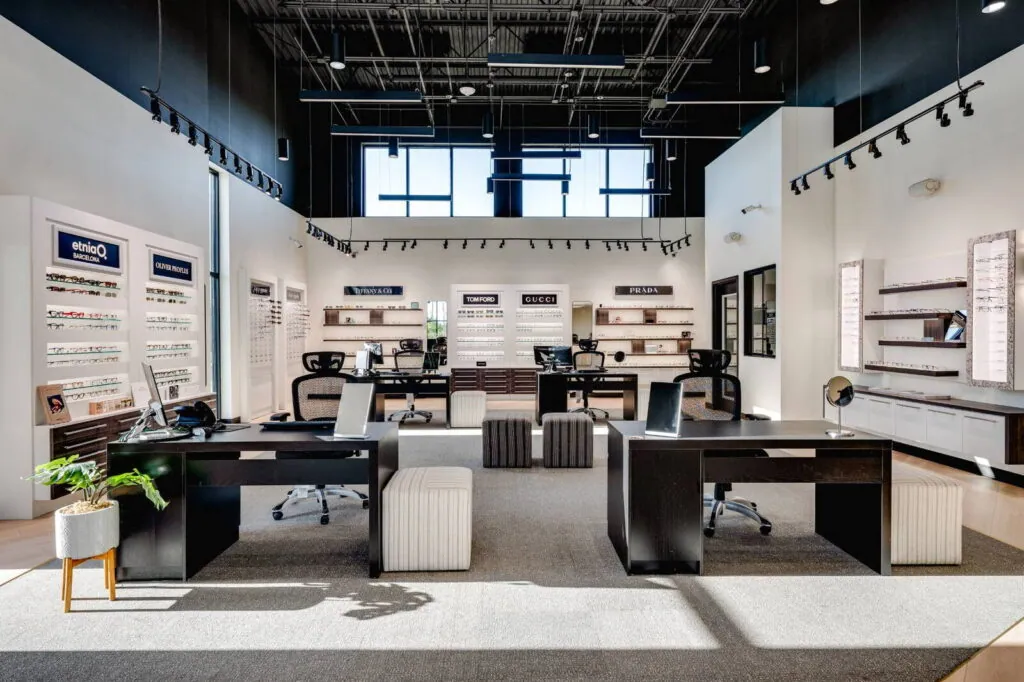
Many eyewear orders go to an outside lab and take a week or more to come back. Village Vision Center’s optical lab is right here in our Highland Village office, so we can make same-day glasses for most single-vision prescriptions.
With spectacle lenses, there is a wide range of available features, and new technologies have made a virtually unlimited range of lens powers possible. Not every feature is right for every patient, so below is a brief guide to each one. When you visit, you will already have some ideas about which features might work best for you.
MEET OUR LAB MANAGER
More than 50 years in the optical lab.
Johnny, our Lab Manager, brings more than 50 years of optical lab experience to Village Vision Center. He began working in the optical lab in 1973 and has been part of Welding Eyecare and Village Vision Center since 1998, giving him 28 years of history with our practice.
His experience and attention to detail play a big role in helping us provide quality eyewear to our patients.
years of optical lab experience
his first year in the lab
years with our practice
LENS MATERIALS
Choosing the right lens material
The vast majority of lenses are now made from a plastic composite. Each material balances thickness, weight, impact resistance and clarity a little differently.
CR-39 plastic
The original standard plastic lens. CR-39 lenses tend to be thicker and heavier than other materials and can break more easily if impacted.
Polycarbonate
The material most patients choose. Polycarbonate lenses are lightweight and thinner than standard plastic, and they are impact resistant.
Trivex
Like polycarbonate, Trivex is lightweight and impact resistant, but it offers better clarity and is a safety-grade material. We offer Trivex lenses to maximize visual clarity while remaining lightweight, impact resistant and scratch resistant.
High-index
Made for patients with higher prescriptions, high-index lenses are the thinnest and lightest lenses possible for strong powers.
LENS COATINGS & FEATURES
Coatings for clearer, tougher lenses.
Hard coat finish. A coating of silica particles baked onto the front and back surfaces of both lenses. It resists scratches and nicks, and over time a hard coat finish reduces scratches by approximately 75%.
Anti-reflective coating. The same kind of coating used on high-quality camera lenses, which gives them their faint purplish sheen. It reduces reflections and glare from lights by over 80%, which is especially helpful when driving at night past streetlights and headlights, or when working at a computer. Anti-reflective coatings have a hard coat finish built in, and they are hydrophobic, so water beads up on the lens.
Blue light filtering. Filters part of the blue light from screens and LED lighting, which some patients find more comfortable during long hours on digital devices.
Anti-reflective coating and blue light filtering are optional upgrades. Our team can help you decide which features make sense for you.

SUN & SPECIALTY LENSES
Lenses for every kind of light
Lenses are tinted for many reasons: as an accent to a stylish frame, for comfort in bright light, or for a specific activity. We offer any color or density you can imagine.
Photochromic lenses
Photochromic lenses (such as Transitions) change from clear to tinted. Ultraviolet light from the sun changes the chemistry of the lens and causes it to darken, and indoors the lenses lighten to nearly clear. They also block ultraviolet rays. Inside a car they darken only partly, because the windshield blocks much of the UV. Traditional Transitions are best if you prefer clear lenses indoors; if you are sensitive to bright light, Transitions XTRActive keeps a comfortable light tint indoors and darkens moderately in the car.
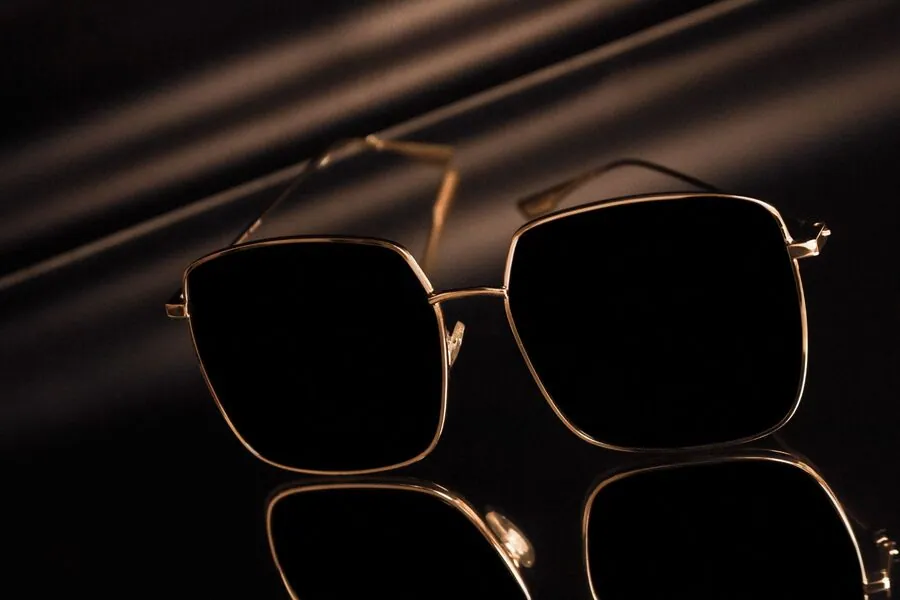
Tinted & mirrored sun lenses
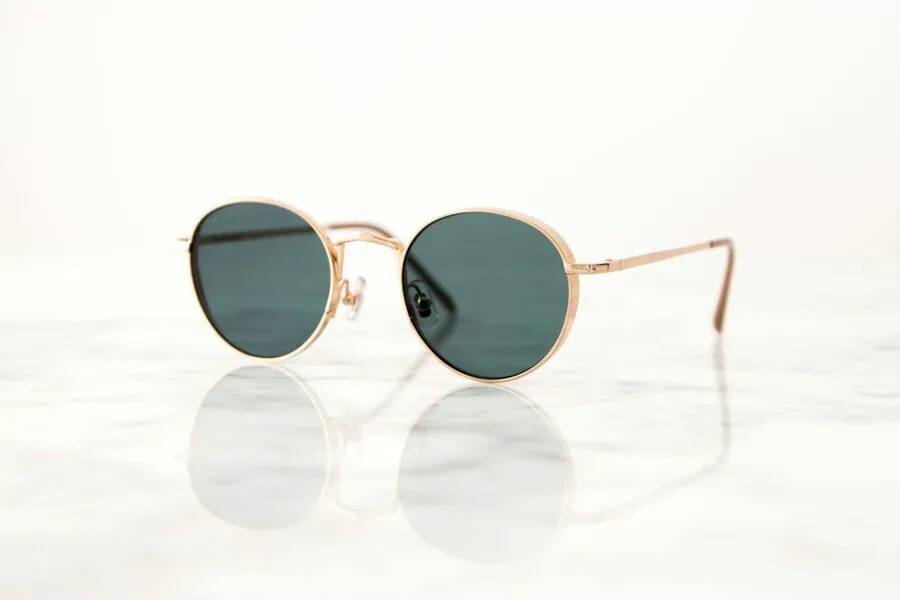
Tints can be an accent to a stylish frame or help patients who are very sensitive to bright light (photophobia), which can come with migraines or severe allergies. Colors range from neutral gray, brown and green to combinations of them, as a solid tint or a gradient that is dark at the top and clear at the bottom, helpful under overhead fluorescent light while keeping full light for reading. Mirror finishes are also available.
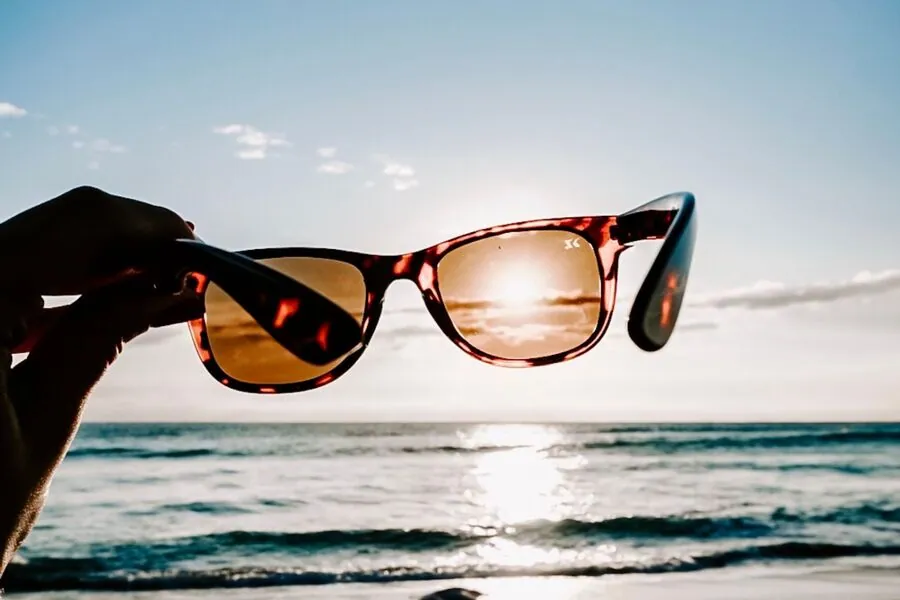
Polarized sun lenses
Polarized sunglasses eliminate reflected glare from wet road surfaces, bumpers, windshields and water on roads, lakes and rivers. They are particularly useful for drivers, boaters, anglers, hunters and many other outdoor activities.
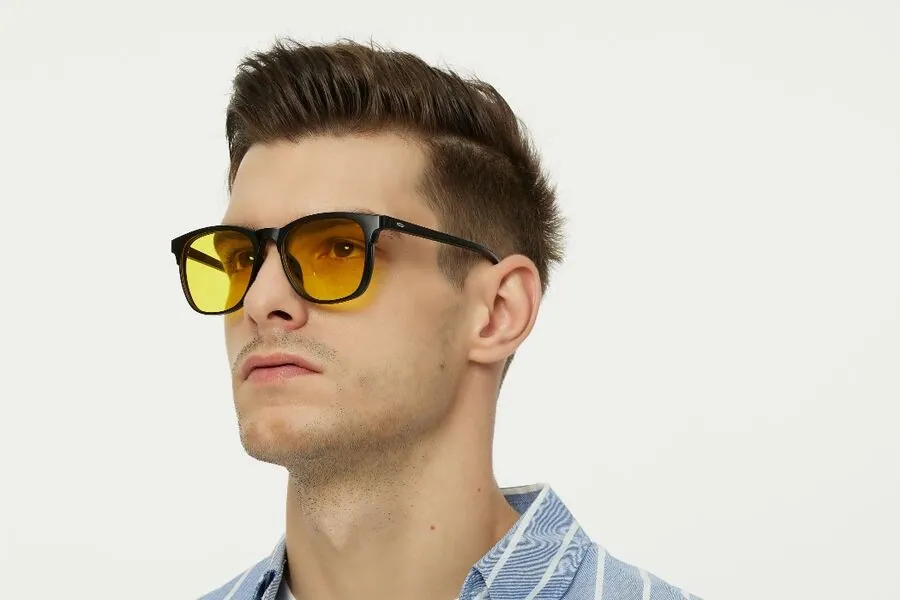
Yellow & orange lenses
Yellow and orange lenses increase contrast around daybreak and twilight, when light is bluer. The lens filters out blue wavelengths, so blue objects appear darker and stand out against other colors, which is why hunters often prefer them.
Children & sunglasses. Many skin cancers are linked to excessive sun exposure, and ultraviolet light from the sun is even more damaging for young children, for their eyes as well as their skin. We recommend sunglasses for children, along with a cap with a bill, to protect their young eyes.
GOOD TO KNOW
Lenses, answered
Which lens material is right for me?
It depends on your prescription, frame and lifestyle. Polycarbonate is the most popular choice, Trivex offers better clarity in a similarly light and impact-resistant lens, and high-index lenses are the thinnest option for strong prescriptions. Our team will recommend the best material for you.
Is an anti-reflective coating worth it?
For many patients, yes. It reduces reflections and glare from lights by over 80%, which makes night driving and computer work more comfortable, and it includes a scratch-resistant hard coat. It is available as an optional upgrade.
Do photochromic lenses work in the car?
Only partly. Windshields block much of the UV light that makes photochromic lenses darken. Transitions XTRActive lenses are designed to darken moderately behind the windshield.
Do I need blue light filtering?
Blue light isn’t all bad. In the morning, natural blue light helps wake the body up and set its circadian rhythm for the day. As the day goes on, though, long hours of blue light from computers, phones and LED lighting can strain the visual system. Blue light filtering can make that screen time more comfortable for some people, and it is available as an optional upgrade. If your eyes often feel strained, an eye exam can check for other causes, such as dry eye or an outdated prescription.
Can I get polarized or tinted lenses in my prescription?
Yes. Polarized, tinted, mirrored and photochromic lenses are available for most prescriptions. Our team can help you choose the right option for your frame and how you plan to wear it.
READY WHEN YOU ARE